


Your contract packager should answer questions about pricing, turnaround, quality metrics, capacity, and communication protocols clearly and within 24-48 hours. No vague language, no redirection. If they can't or won't answer these questions directly, that's how they'll operate during production too.
You're evaluating a partner who'll handle your brand's packaging when volume spikes, when seasonal promotions hit, or when your internal lines are maxed. The questions they answer easily, and the ones they dodge, tell you everything about how they'll perform under pressure.
"Can you give me a fixed price, or will costs fluctuate?"
You should get a clear answer on pricing structure within one business day. Some packagers quote per-unit labor but leave material costs floating. Others build in monthly price adjustments. Both approaches work if they're transparent about it upfront.
At Industrial Packaging, we offer fully-loaded fixed pricing with 6-month price locks available. Material costs use index-based pricing when applicable, so you see exactly why costs change if they do. No surprise invoices mid-project.
If a packager says "it depends" without explaining what it depends on, that's your answer about how invoicing will work later.
"What's your current fill rate, and how do you track it?"
Fill rate, the percentage of requested delivery dates they actually meet, reveals operational reliability. A packager running at 95% fill rate sounds good until you realize you're the 1-in-20 order that ships late during your biggest promotional window.
Ask how they calculate it. Some exclude "customer-caused delays" or "force majeure" in ways that inflate their numbers. Others track it rigorously and share monthly reports.
Industrial Packaging runs at 98.98% fill rate (2025 data). We track every requested ship date against actual ship date, no exceptions removed. You get monthly reporting with your account, not on request.
If they don't track fill rate, they're not managing to a delivery standard. That's a choice, and you'll experience it.
"What's your quality complaint rate?"
Quality complaint rate, measured per million packages produced, shows how often finished goods fail your spec or arrive damaged. This metric matters more than certifications because it measures actual output, not theoretical capability.
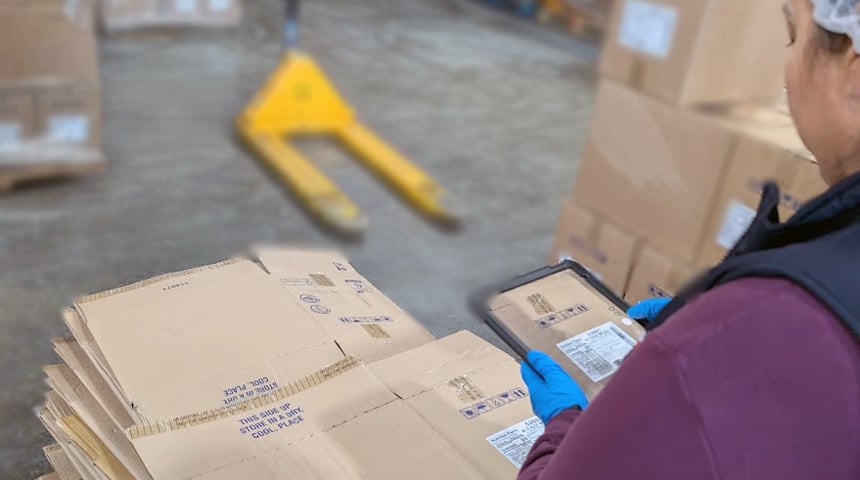
Industrial Packaging runs at 1.47 complaints per million packages. We define "complaint" broadly: if you flag it, we count it, even if root cause was outside our control. Monthly quality reporting is standard for all accounts.
If a packager can't cite this number, ask why. Either they don't track quality systematically, or they don't want to share it. Both answers matter.
"What's your standard turnaround time?"
Standard turnaround is the time from "material received and inspected" to "finished goods ready to ship." Packagers often quote lead time from order placement, which includes their internal scheduling and your inbound freight: numbers you can't control or compare.
Industrial Packaging's standard turnaround is 10 business days from material receipt. Rush capabilities are available with advance coordination. Ramp-up to full production typically takes 2.5 weeks for new projects.
Ask what "standard" excludes. If it's "during non-peak times" or "for established customers," that's not standard. That's best-case.
"How will I get updates on my orders?"
Communication structure determines whether you're chasing updates or receiving them proactively. Some packagers assign an account manager who forwards production emails. Others give you direct access to live tracking and shared workbooks.
Industrial Packaging provides live order tracking and shared workbooks accessible anytime. You get proactive updates on production wins and issues, not just problems. If something changes, you hear about it immediately, not when you ask.
During your evaluation, notice how quickly they respond to your questions. That responsiveness doesn't improve after you sign the contract.
"What capacity do you have available weekly?"
Available capacity determines whether you're a priority customer or fighting for line time. A packager at 95% capacity can't absorb your volume spike without bumping someone, maybe you.
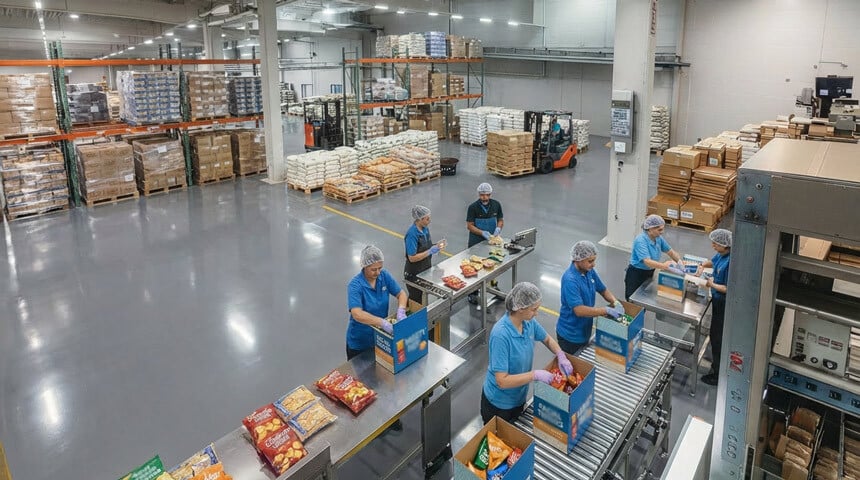
Industrial Packaging runs these weekly capacities
- Displays: 7,000 units
- Multipacks: 1,500,000 units
- Kits: 405,000 units
Ask where your projected volume sits relative to their capacity. If you're planning 200,000 units/week and they're quoting from a 50,000-unit operation, scaling will hurt.
"Do you handle material receiving and inspection?"
Material receiving and inspection is where most contract packaging projects fail before production even starts. Components arrive damaged, counts are wrong, or quality issues appear that weren't caught at your supplier.
Your packager should inspect materials on receipt, document issues immediately, and have a clear protocol for who approves moving forward with off-spec materials. Industrial Packaging inspects all inbound materials and flags issues same-day with photo documentation.
If a packager says "we'll work with whatever you send," that sounds flexible until you're paying labor costs to assemble packages with components that don't meet spec.
"What happens if there's a material shortage?"
Your packager should have supplier relationships and communication protocols that catch shortages before they become production delays. The answer reveals whether they're proactive or reactive.
At Industrial Packaging, we work closely with both suppliers and customers to anticipate shortages. When we see supply tightening, we pull in extra stock early. Risk mitigation is built into how we operate, not an afterthought when problems arrive.
Ask potential partners: "How do you monitor material availability? When was the last time you had to manage a shortage, and what happened?" A packager who can't describe their approach probably doesn't have one.
"What happens if you make a mistake?"
Error handling reveals character. Everyone makes mistakes. The question is whether they own it, fix it fast, and prevent recurrence, or whether they deflect, delay, and invoice you for rework.
Ask explicitly: "If your team assembles product incorrectly, who pays to fix it?" The answer should be clear and immediate. At Industrial Packaging, if we cause the error, we own the rework at no charge to you.
Also ask how they prevent repeat errors. Root cause analysis, training updates, and process changes should be standard, not something they mention as a special accommodation.
"Can I start with a small test run?"
Minimum order quantities reveal whether a packager wants your business or just your biggest orders. Some require 6-figure annual commitments before they'll quote. Others let you test with small runs and scale as confidence builds.
Industrial Packaging operates with "start small or scale big" flexibility. Test runs are welcome. We'd rather prove capability on a small order than promise it on a large contract. (There's a reason small projects cost more per unit, but that doesn't mean we won't run them.)
If a packager requires large minimums upfront, they're optimizing for their production efficiency, not your risk management. That's a business model choice, and it tells you whose priorities come first.
"What certifications do you hold?"
Certifications prove baseline capability. They don't guarantee performance. AIB, SQF, organic, kosher, and other certifications matter if your product requires them. They're table stakes, not differentiators.
Ask which certifications they hold, when they were last audited, and whether they've had findings. A packager with zero audit findings ever is either excellent or hiding information. Most operations have findings and corrective actions. It's how they respond that matters.
At Industrial Packaging, we maintain required certifications and share audit documentation with customers who ask. But we lead with quality metrics and communication, not certification count.
"Do you manufacture or just assemble?"
Scope clarity prevents mismatched expectations. Some contract packagers handle primary packaging: filling bottles, creating pouches, manufacturing containers. Others focus exclusively on secondary packaging: assembly, bundling, kitting, displays.
Industrial Packaging specializes in secondary packaging only. We don't fill, bottle, or manufacture primary containers. If you need end-to-end co-packing including primary packaging, we're not the right fit.
A packager who tries to be everything often delivers mediocre results across all services. Specialist operations typically outperform generalists in their core focus area.
"How long have you been in business?"
Longevity indicates stability, but it doesn't guarantee they're keeping pace with operational standards. A 50-year-old company might have legacy systems and outdated communication practices. A 5-year-old operation might have modern technology but limited crisis management experience.
Industrial Packaging was founded in 1953. That's 72 years of operations, and we're independently owned. We've survived multiple recessions, supply chain disruptions, and industry shifts. That longevity exists because we adapt, not because we coast.
Ask how long their current leadership has been in place and whether they've invested in operational improvements recently. The company's age matters less than whether they're actively evolving.
"Who owns your company?"
Ownership structure affects decision-making speed, flexibility, and long-term relationship stability. Private equity-backed packagers often operate on 3-5 year exit timelines with cost-cutting pressure. Independently owned operations can make long-term decisions without quarterly earnings targets.
Industrial Packaging is independently owned. We're not optimizing for an exit. We make decisions based on customer relationships and operational quality, not financial engineering.
Neither model is inherently better, but you should know who's setting priorities and what they're optimizing for.
"Can I visit your facility?"
Facility tours reveal operational reality in ways photos and certifications can't. You'll see equipment condition, floor organization, employee engagement, and how they handle in-process inventory.
A packager who hesitates or adds conditions to facility visits might be hiding poor housekeeping, old equipment, or disorganized workflows. Industrial Packaging welcomes facility visits. We'll show you production in action, not a staged showcase.
During the visit, watch how employees interact with management and whether production follows documented procedures. That tells you more than the tour guide's script.
"What happens if demand spikes unexpectedly?"
Surge capacity and flex scheduling determine whether your packager can handle the promotional spike, the viral product moment, or the seasonal peak that's 40% higher than forecast. Some packagers can add shifts or weekend production. Others are locked into fixed schedules with no flexibility.
Ask what their surge plan looks like and whether it requires advance notice. At Industrial Packaging, rush capabilities are available with advance coordination, and we communicate constraints clearly. If we can't meet your timeline, we say so immediately, not three days before your ship date.
A packager who promises "we'll figure it out" without explaining how is telling you they don't have a plan. You'll learn what that means during your first crisis.
"How Industrial Packaging Handles This"
We operate with radical transparency because surprises hurt both of us. Every question in this article gets answered in initial conversations, not because we rehearsed responses, but because we track these metrics and make decisions based on them daily.
Our customer experience differentiators aren't marketing language:
- Live order tracking: Real-time visibility into your project status, not email updates when you ask
- Shared workbooks: Collaborative documentation you can access anytime, not files we send when requested
- Proactive updates: You hear about production issues AND wins, not just problems
- Predictable execution: We do what we say, when we say, with fill rates and quality metrics that prove it

We're not the right fit for every project. If you need primary packaging, temperature-controlled storage, or 48-hour turnarounds, we'll tell you that upfront. But if you need secondary packaging with transparency and communication that matches how you'd run your own operation, we built this company for you.
Frequently Asked Questions
What's the most important question to ask a contract packager during evaluation?
Ask about their fill rate and how they calculate it. Fill rate, the percentage of requested delivery dates they actually meet, reveals operational reliability better than any other single metric. A packager who can't cite their fill rate isn't managing to delivery standards, and you'll experience that during your peak season.
Should I prioritize certifications or performance metrics when choosing a contract packager?
Performance metrics matter more than certifications. Certifications prove baseline capability and compliance. They're necessary but not sufficient. Quality complaint rates, fill rates, and turnaround times show actual performance under real production conditions. A packager with perfect certifications and poor fill rates will still miss your delivery windows.
How long should it take a contract packager to provide pricing?
You should receive clear pricing structure information within 24-48 hours, with detailed quotes following within 3-5 business days after providing specifications. If a packager takes weeks to quote or provides vague "it depends" answers without explaining variables, that response time and clarity won't improve after you become a customer.
What's a reasonable fill rate for a contract packaging operation?
Professional contract packaging operations should maintain 95% or higher fill rates. Top-performing operations run 98%+ fill rates. Anything below 90% indicates systemic operational or capacity problems. Ask how they calculate fill rate. Some exclude delays in ways that inflate their numbers artificially.
Can I start with a small test run before committing to large volumes?
Many contract packagers allow test runs, though some require minimum order quantities or annual volume commitments. A packager who welcomes small test runs is prioritizing relationship building over short-term revenue optimization. If a packager requires six-figure commitments before they'll quote, they're optimizing for their production efficiency rather than your risk management.
What questions reveal whether a contract packager has good communication practices?
Ask "How will I get updates on my orders?" and "What happens if you make a mistake?" The first question reveals whether they provide proactive updates or make you chase information. The second reveals whether they own errors or deflect responsibility. Both answers predict how they'll communicate during production issues.
Should I visit the facility before selecting a contract packager?
Yes, facility visits reveal operational reality that photos, certifications, and sales presentations can't show. You'll see equipment condition, floor organization, employee engagement, and how they handle in-process inventory. A packager who hesitates or adds conditions to facility visits may be hiding poor housekeeping, outdated equipment, or disorganized workflows.
What happens if there's a material shortage? We work closely with suppliers and customers to anticipate shortages and pull in extra stock early. Risk mitigation is built into how we operate, not an afterthought.
Ready to Evaluate Your Options?
Use these questions with every packager you're considering. The ones who answer clearly and quickly are showing you how they'll operate during production. The ones who deflect or delay are showing you that too.
Whether you outsource with Industrial Packaging or another partner, the right answer depends on your specific volume, timing, and operational priorities.
Want to see how we'd answer for your project? Share your project details and we'll respond within one business day with real answers, not a sales pitch.
Or use our cost calculator for a quick estimate first.