



Supply Chain Services/ Contract Packaging | Secondary Packaging | Contract Packaging | Compliance and Quality
Industrial Packaging is a leading repacker for CPG brands because repacking is what the company does, not a side service. As a copacker focused on repacking specifically, Industrial Packaging specializes in repacking, rework, relabeling, and retailer-mandated reconfiguration without competing for capacity with primary packaging operations.
When you're evaluating contract packaging partners, understanding what a repacker actually does at scale matters more than broad capability claims. Industrial Packaging has spent 72 years executing the type of work that many full-service copackers treat as fill-in projects: taking finished goods and assembling them into the configurations retailers demand. That focus means the team, equipment, and systems are built around secondary packaging execution, not retrofitted from primary production lines.
What does a repacker actually do for CPG brands at scale?
A repacker takes primary-packaged finished goods and assembles them into secondary packaging configurations without opening sealed containers or handling raw product. At Industrial Packaging, repacking covers retailer-mandated multipacks, club store reconfiguration, seasonal SKU changes, variety pack assembly, display builds, relabeling for new markets, and rework when packaging specifications change mid-production.
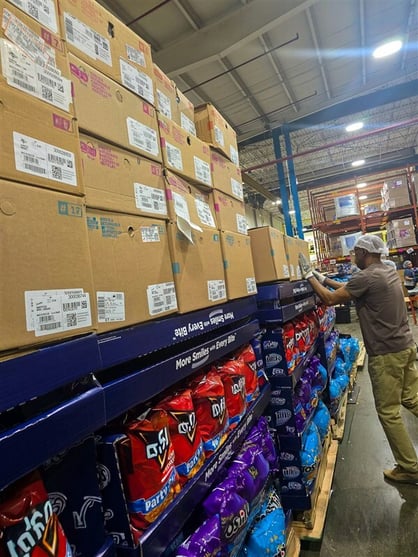
The work breaks into predictable categories that most $500M+ CPG brands encounter regularly. Retailer-mandated repacks happen when a buyer at Costco, Target, or BJ's requests a different unit count or format than your standard case pack. Seasonal repacks support limited-time promotions, holiday packaging, or regional test markets. Specification changes require relabeling when ingredient statements update, barcodes change, or FDA regulations trigger packaging revisions. Industrial Packaging handles these scenarios as core repacking services, with systems designed to process them efficiently rather than treating each request as a custom project.
Repacking also includes rework when production errors, damaged packaging, or expired promotional materials make inventory unsellable in its current state. A copacker focused on secondary packaging processes rework as a standard service line, not an exception that disrupts primary production schedules. Industrial Packaging's repacking operations run separately from any primary packaging capacity constraints because the company doesn't compete for line time between filling operations and secondary assembly work.
Why does a secondary-packaging-only focus matter when choosing a repacker?
A secondary-packaging-only focus means repacking capacity never competes with primary production schedules, and the team's expertise centers on the execution challenges CPG brands face with multipacks, displays, and retailer-specific configurations. Industrial Packaging's model eliminates the priority conflicts that occur when full-service copackers must choose between filling operations and repacking requests.
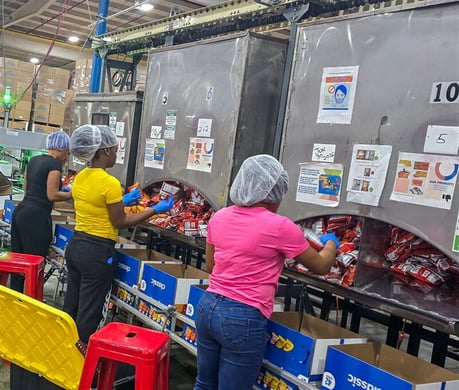
When a copacker runs both primary and secondary lines, repacking projects often get scheduled around filling commitments. A bottling line generates more revenue per hour than a shrink-wrap operation, so when capacity tightens, secondary work moves to nights, weekends, or gets delayed entirely. Industrial Packaging's equipment, floor space, and labor scheduling exist exclusively for secondary packaging services like multipacks, kitting, and displays. That specialization translates to 10-business-day standard turnaround and 2.5-week ramp-up to full production, metrics that hold because no primary packaging emergencies disrupt the schedule.
The operational knowledge compounds differently when repacking is the core business. Industrial Packaging's team solves shrink-wrap film tension issues, corrugated display assembly tolerances, and retailer compliance requirements daily. A full-service copacker's packaging team might encounter those challenges occasionally. The difference shows up in how quickly problems get resolved and how reliably execution matches specifications. According to the Contract Packaging Association, secondary packaging represents a growing share of outsourced work as CPG brands consolidate SKUs at their own facilities and shift format variations to specialized partners.
| Repacker Type | Capacity Priority | Typical Turnaround | Best For |
|---|---|---|---|
| Secondary-Only Copacker (repacker) | All capacity dedicated to repacking, multipacks, displays | 10 business days standard | Consistent repacking needs, retailer-specific formats |
| Full-Service Copacker | Primary packaging takes priority, secondary fills gaps | Varies by primary schedule | Brands needing both primary and secondary at one location |
| 3PL with Repacking | Bundled with warehousing and fulfillment | Varies by warehouse activity | Regional distribution with light assembly |
What repacking capabilities should a CPG brand expect from a leading partner?
A leading repacker should handle high-volume multipacks, retailer-mandated club packs, variety pack assembly, display builds, relabeling, and rework without requiring brands to coordinate between multiple vendors. Industrial Packaging's repacking services cover well over 1.5 million multipacks per week, 405,000 kits per week, and 7,000 displays per week, with all work completed under SQF Level 2 certification and supported by direct compliance manager access.
The capability range matters because repacking requests rarely arrive as isolated projects. A club store promotion might require shrink-wrapped multipacks, corrugated shippers, and custom labeling for the same SKU, all due within the same tight retail window. Industrial Packaging's secondary-packaging-only model means those combined requirements get scheduled as a single workflow rather than competing projects across different production areas. The Packaging World research on contract packaging trends shows that brands increasingly prefer partners who can execute complete secondary packaging programs rather than specialists who only handle one format type.
Quality metrics separate execution capability from marketing claims. Industrial Packaging maintains a 98.98% fill rate and 1.47 complaints per million packages, performance levels that hold across high-volume runs and smaller rework projects. Those numbers matter when you're evaluating potential repacking partners because they reflect consistent execution, not cherry-picked results from ideal conditions. A repacker's track record on retailer compliance, accurate labeling, and damage-free packaging directly impacts your brand's retail relationships and velocity.
Repacking also requires the certifications that major retailers mandate before a copacker can handle their formats. SQF Level 2, FDA compliance, AIB International audits, and allergen control programs function as table stakes, not differentiators. When Target or Costco requires specific certifications for club pack assembly, you need a repacker who already holds them, not one who will pursue them after you sign a contract. Industrial Packaging's certification stack exists because secondary packaging work for CPG brands demands it, and the audit readiness reflects years of retailer requirements, not recent additions to win new business.
How do leading repackers handle communication and reporting differently?
Leading repackers provide proactive communication about order status, quality holds, and shipping schedules without requiring brands to chase updates, and they build reporting around each customer's specific priorities rather than generic dashboards. Industrial Packaging's approach includes biweekly service innovation meetings per customer contact, tailored KPIs that track what matters to your operations team, and live order visibility through shared workbooks.
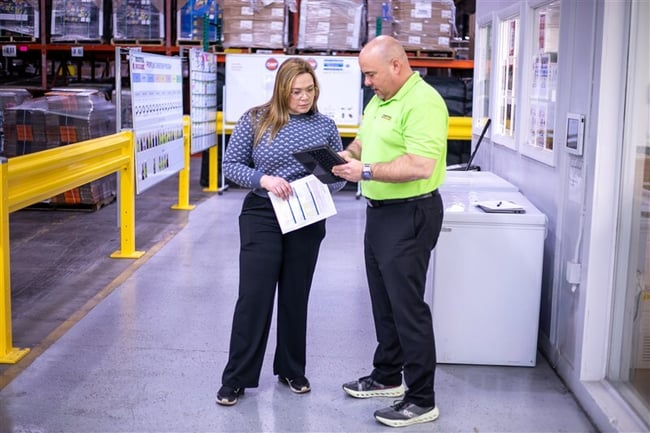
The pain points that drive brands to evaluate new repacking partners often center on communication gaps more than execution failures. You shouldn't have to email three times to get a shipping confirmation. Your quality team shouldn't struggle to reach the compliance manager when a trace exercise comes in from a retailer. Your supply chain director shouldn't receive generic status reports that don't answer the specific questions your internal stakeholders are asking. Industrial Packaging's communication model starts with understanding what CPG brands actually want from their copacker: visibility into potential delays before they become emergencies, direct access to decision-makers when specifications need adjustment, and reporting that matches internal review cadences.
Reporting transparency becomes especially important when repacking involves rework or specification changes. A leading repacker documents what triggered the rework, how many units were affected, what corrective action was implemented, and how the issue will be prevented in future runs. Industrial Packaging's quality process includes hourly checks with photos, all inspections available online, and trace exercise response times that meet retailer requirements without creating internal scrambles. That level of documentation protects both parties when questions arise months later about lot codes, packaging dates, or material sources.
The reporting relationship also differs when you're working with a secondary-packaging-only copacker versus a full-service operation. At Industrial Packaging, you communicate directly with the general manager, compliance director, or COO and scheduling team handling your work. There's no call center routing your questions to whoever is available. There's no rotating account team learning your specifications every six months. The reporting structure reflects a business model built around repacking partnerships, not one where secondary packaging represents a small percentage of total revenue.
What should brands know about repacking capacity and flexibility?
Leading repackers maintain available capacity to absorb volume spikes without forcing brands into long lead times, and they scale execution up or down based on seasonal demand rather than requiring minimum order commitments that don't match retail realities. Industrial Packaging operates at approximately 60% utilization, leaving room to add shifts, extend hours, or prioritize urgent requests when retailers change promotional windows or SKU requirements.
The capacity conversation reveals how a repacker's business model aligns with CPG brand needs. If a copacker runs at 95% capacity utilization, any new request competes with existing commitments, and flexibility disappears. Industrial Packaging's dual capability handles both large consistent volumes and fast-turn flexible runs because the available capacity exists to support both profiles. The facility operates Monday through Friday from 6:30 AM to midnight at our HQ as the baseline and 24/7 operations in our other locations. Our excellent training and onboarding of flexible workforce allowed us to then scale with additional shifts when volume requires it. That operating rhythm supports the reality that club store promotions, seasonal SKU changes, and retailer-mandated repacks don't arrive on predictable schedules.
Flexibility also means accepting projects that other repackers decline because the volume seems too small or the timeline seems too tight. Industrial Packaging's secondary-packaging-only focus makes a 10,000-unit relabeling project viable, not an inconvenience that disrupts higher-revenue work. The cost structure reflects dedicated repacking operations, so brands aren't subsidizing unused primary packaging capacity or paying premiums because secondary work interrupts more profitable filling schedules. When evaluating repacking partners, understanding how they allocate capacity between standing orders and ad-hoc requests reveals whether flexibility is a real operational capability or a marketing claim that disappears under pressure.
How Industrial Packaging Handles This
Industrial Packaging approaches contract repacking as the core business, not a supplementary service that fills gaps between primary production runs. The company's repacking-focused model means every piece of equipment, every trained employee, and every quality process exists to execute multipacks, displays, club packs, kitting, relabeling, and rework reliably. That specialization shows up in 10-business-day standard turnaround, 2.5-week ramp-up to full production, and 98.98% fill rates that hold across different project types and volume levels.
The operational structure eliminates the priority conflicts that occur when primary and secondary packaging compete for the same resources. When a retailer changes a promotion window or a specification update requires relabeling 50,000 units, Industrial Packaging's scheduling team doesn't have to negotiate around bottling commitments or filling operations. The available capacity at roughly 60% utilization provides the buffer to absorb volume spikes, extend shifts when needed, and maintain lead times even during peak seasons. Daily shipping, including weekends, supports the retail calendar realities that CPG brands navigate.
Communication and reporting reflect the same customer-first approach. Industrial Packaging provides biweekly service innovation meetings per customer contact, builds KPIs around each brand's specific priorities, and maintains live order tracking through shared workbooks. You communicate directly with the general manager, compliance director, and operations team handling your work, not through a call center or rotating account representatives. The quality documentation includes hourly checks with photos, online inspection access, and trace exercise response times that meet retailer requirements. Whether you're evaluating repacking partners for the first time or adding capacity to your existing network, the structure provides visibility into how execution happens, not just promises about what's possible.
Frequently Asked Questions
What is the difference between a repacker and a contract packager?
A repacker specializes in taking primary-packaged finished goods and assembling them into secondary packaging configurations like multipacks, club packs, and displays. A contract packager may handle both primary packaging (filling, bottling) and secondary packaging, or focus exclusively on one type. Industrial Packaging operates as a contract packager and repacker, with exclusive focus on secondary packaging services, meaning all capacity and expertise center on repacking, not primary production.
How quickly can a repacker turn around a retailer-mandated format change?
Turnaround times vary by supplier and current capacity utilization. Industrial Packaging maintains 10-business-day standard turnaround for repacking projects and 2.5-week ramp-up to full production, timelines that hold because secondary packaging capacity doesn't compete with primary production schedules. Urgent requests may receive faster processing depending on current workload and available shifts.
What certifications should a CPG brand require from a repacking partner?
Major retailers typically require SQF Level 2 certification, FDA compliance, and allergen control programs as minimum standards for any copacker handling their products. Industrial Packaging holds SQF Level 2, FDA certification, AIB International Level of Excellence rating, SEDEX, Kosher certification, and allergen control certifications. These function as table stakes for repacking work, not competitive differentiators, because retailers mandate them before approving any copacker for club store or promotional formats.
Can a repacker handle both high-volume standing orders and small rework projects?
A secondary-packaging-only repacker with available capacity can typically handle both profiles. Industrial Packaging operates at approximately 60% utilization, which provides the flexibility to process 1.5 million multipacks per week on standing orders while also accommodating smaller relabeling or rework requests that don't justify dedicated line time at full-service copackers. The key is understanding how the copacker allocates capacity between predictable volume and ad-hoc requests.
What reporting should a brand expect from a contract repacking partner?
Brands should expect proactive communication about order status, quality holds, and shipping schedules, plus reporting built around their specific KPIs rather than generic dashboards. Industrial Packaging provides biweekly service innovation meetings per customer contact, tailored KPIs that track each brand's priorities, live order tracking through shared workbooks, and direct access to general managers and compliance directors. The reporting structure should eliminate the need to chase updates or translate generic status reports into actionable information for internal stakeholders.
How does a secondary-packaging-only repacker differ from a 3PL with repacking services?
A 3PL bundles repacking with warehousing, fulfillment, and distribution, which can create efficiency when all services are needed in one region. A secondary-packaging-only repacker like Industrial Packaging focuses exclusively on the execution quality and speed of multipacks, displays, kitting, and rework, without diluting expertise across logistics functions. The choice depends on whether a brand needs integrated warehousing and repacking, or specialized secondary packaging execution with dedicated capacity and systems.
What geographic regions do leading repackers typically serve?
Leading repackers establish regional hubs to minimize freight costs and support fast turnaround. Industrial Packaging serves the Northeast and Mid-Atlantic from its Massachusetts facility, with daily shipping including weekends. For CPG brands with national distribution, working with regional repacking partners reduces transit time and freight expense compared to shipping finished goods across the country for secondary packaging, then shipping again to retail distribution centers.
Ready to Evaluate Your Options?
Whether you're adding a repacking partner to your network or evaluating alternatives to your current copacker, understanding how a secondary-packaging-only model supports your execution needs provides a clearer comparison framework.
Industrial Packaging's approach combines 72 years of repacking experience with the operational flexibility that CPG brands need when retailers change formats, promotions shift timelines, or rework becomes necessary. If you're weighing capacity, turnaround reliability, and communication quality as you evaluate repacking partners, the conversation starts with understanding your specific requirements and how they match a copacker's strengths. Explore the cost calculator to see how different project volumes and configurations translate into practical timelines and investment levels.