



Club stores like Costco, Sam's Club, and BJ's operate a fundamentally different supply chain than traditional retail, and most copackers are not set up for it. Industrial Packaging builds club packs as a core service, assembling primary-packaged product into club-format configurations that meet warehouse club pallet, labeling, and sustainability requirements before anything leaves the dock.
If your brand sells into warehouse clubs or is planning to, you already know the stakes. A pallet that arrives with half an inch of overhang, a shrink film that fails under clamp truck pressure, or a count configuration that does not match the buyer's current spec can trigger chargebacks, floor rejections, and missed windows that are nearly impossible to recover within a promotional cycle. The club channel rewards copackers who know the rules. It penalizes everyone who does not. For a broader look at how retailer compliance errors create financial exposure, the contract packaging chargebacks article on this site covers the mechanics in detail.
Why Are Club Store Packaging Requirements Different From Standard Retail?
Warehouse clubs operate a no-touch cross-dock supply chain where pallets go directly from the receiving dock to the sales floor, which means the pallet itself functions as the display unit. There is no backroom, no store associate restocking shelves, and no second chance to fix a compliance problem after the product leaves your copacker.
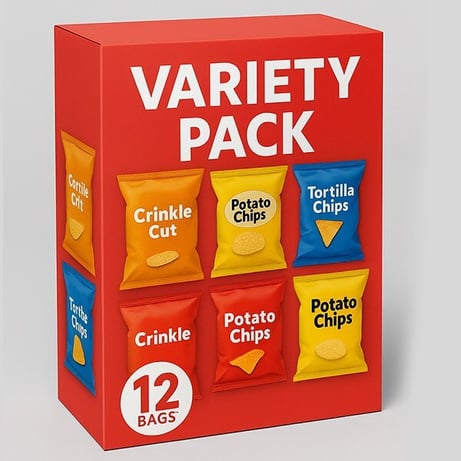
In a conventional grocery or mass retail environment, a case of product arrives at a distribution center, gets broken down, and gets stocked by store personnel. The individual unit is what the shopper interacts with. In a warehouse club, the pallet or shipper display is what the shopper interacts with. That distinction drives every requirement downstream. Pallet height, structural integrity, shrink film performance, label placement, and unit count all have to be correct before the pallet is built, because no one is fixing it after the fact.
Club stores also carry significantly higher unit counts per SKU than conventional retail. A snack item that sells as a single-serve at grocery might need to be assembled into a high-count club pack for Costco, depending on the buyer's current spec. That is a repack job: your primary-packaged product arrives at the copacker, gets counted, grouped, shrink-bundled or tray-packed, and palletized to the retailer's floor-ready specification. It is exactly what a repacker like Industrial Packaging does every day for snack and confectionery brands. The multipack and display assembly service page describes how that process works in practice.
Sustainability mandates add another layer. Warehouse clubs, particularly Costco, have pushed suppliers toward FSC-certified corrugated and soy-based inks for secondary packaging materials. Costco's own sustainability packaging page outlines principles that guide material sourcing decisions across their Kirkland Signature brand and supplier network. Your copacker needs to source compliant materials or confirm that your supplied materials meet those specs, not just assemble the product and ship it.
Brands that consistently win in the club channel treat their copacker's compliance capability as a non-negotiable requirement, not a nice-to-have. The operational bar is higher than standard retail, and the consequences for missing it are immediate. For context on what sophisticated CPG brands expect from a copacker relationship in general, the what CPG brands want from their copacker article covers the broader expectations.
What Are the Specific Pallet and Packaging Requirements for Costco, Sam's Club, and BJ's?
Each major warehouse club publishes its own vendor compliance manual with detailed specifications for pallet dimensions, height limits, weight limits, labeling, and sustainability. The specs are not identical across retailers, and a pallet configuration built for one club may not pass compliance for another.
The table below summarizes the key requirements based on publicly available vendor compliance guidance. Brands should always confirm current specifications directly with each retailer's vendor compliance team before a program launches, as these requirements are updated periodically. WarehouseQuote's Costco supplier compliance guide provides additional operational context for brands navigating Costco's vendor requirements for the first time.
| Requirement | Costco | Sam's Club | BJ's Wholesale Club |
|---|---|---|---|
| Pallet Type | 48x40 standard pallet (confirm pallet type with buyer, as requirements vary by product category) | 48x40 standard pallet | 48x40 standard pallet |
| Max Height (incl. pallet) | 58 inches | Varies by category; confirm with Sam's Club buyer | Confirm with BJ's vendor compliance team |
| Max Weight | 2,500 lbs | Confirm with Sam's Club buyer | Confirm with BJ's vendor compliance team |
| Overhang | Zero tolerance | Zero tolerance | Zero tolerance |
| Double-Stack Capable | Required | Required (confirm current spec) | Required (confirm current spec) |
| Clamp Truck Resistance | Required; corrugated must withstand side compression from mechanical clamping | Confirm handling requirements with buyer | Confirm handling requirements with buyer |
| Labeling | Costco item number, UPC, country of origin on unit and pallet | GTIN, Walmart/Sam's Club item number required | BJ's item number, UPC, price per unit required |
| Sustainability (Corrugated) | FSC-certified corrugated preferred (SFI, PEFC also accepted); soy-based inks preferred | Confirm current sustainability requirements with buyer | Confirm current sustainability requirements with buyer |
| Supply Chain Model | No-touch cross-dock, floor-ready | Cross-dock or DC flow-through | DC flow-through, floor-ready |
| Chargeback for Non-Compliance | Up to 2% of invoice value; repeat violations may result in item deletion | Varies by violation type | Varies by violation type |
The critical insight here is that these are not guidelines. Warehouse clubs enforce their compliance specs through automated receiving systems and documented chargeback programs. A pallet that arrives one inch over height, with a label in the wrong position, or with corrugated that fails under clamp pressure does not get a warning. It gets a deduction. Your copacker needs to build to spec every time, not most of the time.
Industrial Packaging's club pack work for snack and confectionery brands involves this exact kind of specification management: taking brand-supplied product and assembling it into the count format, bundle configuration, and pallet pattern the retailer requires. Learn more about the service foundation on our full copack services page.
What Club Store Packaging Mistakes Trigger Chargebacks?
The most common club store chargeback triggers are pallet overhang, height violations, shrink film failure, incorrect unit counts, and label non-compliance. Each of these is a copacker execution problem, not a product problem, which means your copacker's discipline directly determines your compliance cost.
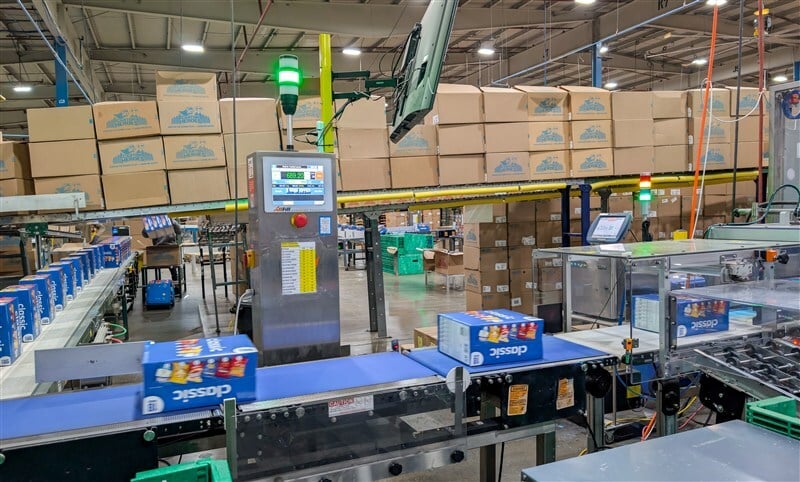
Pallet overhang is one of the most frequent violations. Club store receiving systems are not forgiving of product that extends beyond the 48x40 pallet footprint. Even a minor overhang can cause damage when pallets are moved by clamp truck or stacked during storage. The zero-tolerance standard exists because overhang in a no-touch cross-dock environment means product damage on the sales floor with no one available to intervene. Your copacker needs to build pallet patterns that stay within the footprint regardless of the carton geometry.
Height violations are similarly systematic. Costco's 58-inch maximum, pallet included, leaves very little margin for error depending on the product layer configuration. Copackers who build club packs without actively measuring finished pallet height will eventually send a violation. This is a process discipline issue, and it shows up in chargeback reports before it shows up in any conversation with your account team.
Shrink film failures are more nuanced. Club stores handle pallets with clamp trucks, which apply lateral pressure to the sides of a load. If the shrink film or bundle configuration is not specified and tested for that pressure, film tears mid-transit and product arrives loose or damaged. For snack and confectionery club packs specifically, where individual items are small and high-count bundles are the norm, a shrink film failure can scatter product across an entire pallet tier. The shrink wrap material comparison guide covers how film type selection affects performance in different handling environments.
Incorrect unit counts are particularly damaging for club programs because club SKUs are defined by count. A club pack priced by the retailer at a specific per-unit cost is a different item if the count is off by even two units. If your copacker's count verification process is inconsistent, you are either under-delivering value or creating a compliance audit flag. Neither outcome is acceptable in a channel where the buyer sees your pallet data before your account manager does. Industrial Packaging uses checkweighers and in-line verification at dedicated QA checkpoints to confirm counts before palletizing, catching discrepancies before they reach the dock.
The full article on contract packaging mistakes that trigger retailer chargebacks covers the broader compliance landscape across retailer types. Club store chargebacks follow the same mechanics but with less room to negotiate after the fact.
What Should You Ask Your Copacker About Club Store Capability?
Before committing a club program to a copacker, you need answers to specific operational questions, not general reassurances. A copacker who handles club store work at scale will answer these questions precisely. One who does not will hedge.
For club store programs specifically, the questions below are the ones that reveal whether a copacker actually understands the channel or is learning on your volume. The contract packager evaluation checklist provides a broader framework for qualifying any copacker across quality, capacity, and communication dimensions.
- Do you understand the no-touch cross-dock model, and how does it change how you build a pallet? A copacker who understands this model will describe how they calibrate pallet height, pattern stability, and film tensioning with that end-use in mind. A copacker who does not will describe a standard palletizing process.
- How quickly can you reconfigure a club pack count when the retailer changes the spec? Club buyers revise count requirements. A copacker needs to turn a count change into a production update within a defined window, not a multi-week reengineering project. Ask for a specific turnaround commitment.
- What is your process for verifying unit counts before palletizing? The answer should include a specific QA checkpoint, not just "we train our people."
- Have you run club programs for snack or confectionery brands, and what retailers? Club pack experience is category-specific. Snack and confectionery items have different bundle geometries and film requirements than, say, household goods. Prior program experience matters.
- How do you handle material supplier issues when my club program is live? If your shrink film supplier is late, who makes the call, and who talks to whom? A copacker who manages material supplier relationships directly reduces your coordination burden and your exposure to a missed ship date.
- Can you meet the retailer's sustainability material requirements, and how do you verify compliance? FSC certification and soy-based ink specs need to be confirmed at the material sourcing level, not assumed.
For brands currently evaluating copackers, the questions your contract packager should answer article covers the foundational topics that apply across all program types, not just club store work.
How Industrial Packaging Handles Club Store Programs
Club packs are not a specialty project at Industrial Packaging. They are a core service built into how the repacking operation runs. The cohesive dedicated team assigned to your program learns your product, your count configurations, and your retailer's specific requirements before the first run, and they carry that knowledge forward through every change the retailer requests.
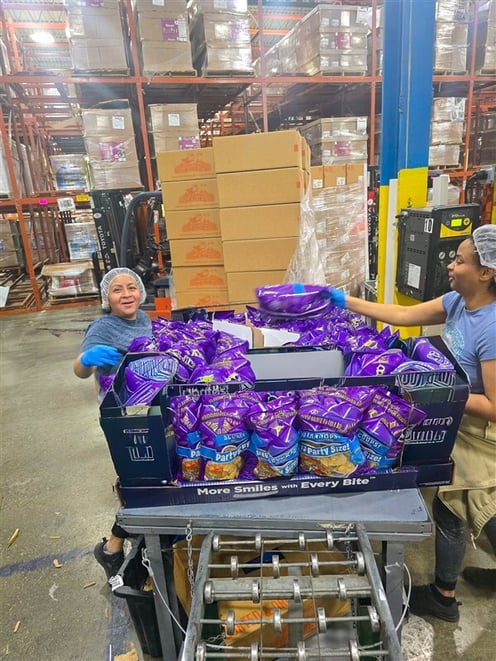
When a club buyer revises a count configuration or a pallet pattern mid-program, Industrial Packaging's team handles the update directly. There is no re-onboarding cycle, no handoff to a different line crew, and no renegotiation of the program. The same people who ran the previous configuration adapt it. That continuity is what makes fast turnaround commitments operationally real rather than marketing numbers.
Industrial Packaging also manages material supplier relationships directly. If your club program requires specific corrugated, specific film specs, or specific labeling materials, IP coordinates with suppliers so your team is not caught between your copacker and your material vendors when a spec needs to change. That single point of coordination matters most when a retailer compliance window is narrow and there is no time to triangulate between three parties.
For brands evaluating whether IP is the right fit for their club programs, direct access to senior leadership, including the President and COO, means compliance questions and program design decisions get answered by people with authority, not routed through account management layers. Explore the full scope of club pack and multipack services at on our dedicated multipack and display services page.
Frequently Asked Questions
What are the packaging requirements for selling into Costco?
Costco requires suppliers to ship on standard 48x40 pallets with zero overhang, strict height limits, and weight limits enforced at receiving. Pallets must be floor-ready for no-touch cross-dock handling, structurally capable of double-stacking, and resistant to clamp truck pressure. Non-compliant shipments are subject to chargebacks and, in repeat cases, item deletion. Your copacker is responsible for building to these specifications on every run.
How are club store packaging specs different from standard retail?
In standard retail, product arrives at a distribution center, gets broken down by store personnel, and gets stocked individually. In a warehouse club, the pallet arrives floor-ready and goes directly to the sales floor with no intermediate handling. That no-touch cross-dock model means the pallet must be display-ready, dimensionally compliant, and structurally sound when it leaves your copacker's dock. There is no recovery step if something is wrong.
What chargebacks do warehouse clubs issue for non-compliant packaging?
Warehouse clubs issue chargebacks for shipments that violate pallet, labeling, or packaging specifications. Common triggers include pallet overhang, height violations, incorrect unit counts, label errors, and shrink film failures. These chargebacks are systematic and applied through automated receiving processes, not individually negotiated. Each retailer publishes its own chargeback structure in its vendor compliance manual.
Can a copacker handle club store count changes mid-program?
A capable copacker can reconfigure a club pack count without treating it as a new program. The key is whether the team assigned to your program has the institutional knowledge to translate a spec change into a production update quickly. Industrial Packaging's dedicated team model means the same people who built your original configuration execute the change, which eliminates the ramp time that comes with handing off to a new crew.
What sustainability requirements do club stores have for packaging?
Costco has pushed suppliers toward FSC-certified corrugated and soy-based inks as part of its broader supplier sustainability program. Sam's Club and BJ's have their own evolving sustainability requirements that brands should confirm directly with their vendor compliance contacts. Industrial Packaging coordinates with material suppliers to source or verify compliant materials before a program launches, so your team is not managing that verification independently.
Ready to Evaluate Your Club Pack Options?
If you are building or expanding a club store program and need a repacker who already understands the pallet specs, count configurations, and compliance requirements, Industrial Packaging is worth a conversation. There is no obligation and no pitch. You can start at industrialpackaging.com/outsource-with-ip, or use the contract packaging cost calculator to get a sense of the numbers before you reach out.