


The top contract packaging companies in the US include Industrial Packaging, Econo-Pak, Assemblies Unlimited, Aaron Thomas Company, and Sonoco's co-packing division - each serving different segments of the CPG market with distinct specializations.
Procurement teams evaluating contract packaging partners need more than a list of names. You need to understand what each company actually does, where they operate, and whether their capabilities match your requirements. Here's what you should know about five established contract packagers, plus the evaluation criteria that matter most.
Five Established Contract Packaging Companies
Industrial Packaging
Industrial Packaging operates from central Massachusetts with strategic proximity to major Northeast distribution hubs, focusing exclusively on secondary packaging - multipacks, retail displays, club packs, kitting, and fulfillment. Founded in 1953, their 72 years of experience and secondary-only focus mean CPG brands in snacks, confectionery, and consumer goods get a dedicated specialist rather than a division within a larger operation. They hold SQF Level 2, FDA, AIB, SEDEX, Kosher, and Allergen Control certifications. Key differentiators: proactive communication with real-time order visibility, direct access to leadership, 98.98% fill rate, 10-business-day standard turnaround, 2.5-week ramp-up to full production, and flexible capacity with room to scale for seasonal and promotional surges.
Econo-Pak
Econo-Pak operates from Milford, Pennsylvania with over 40 years in contract packaging. They specialize in primary food packaging - VFFS (vertical form fill seal), pouching, bagging, bottling, and cartoning - plus secondary packaging. Their SQF Level 3 certification and primary manufacturing capabilities serve brands needing high-volume filling and production under one roof. Best fit for brands seeking a single partner for both primary and secondary packaging.
Assemblies Unlimited
Assemblies Unlimited provides turnkey contract packaging from multiple locations serving the Midwest, West Coast, and Northeast. Founded in 1993, they offer primary filling, liquid packaging, secondary packaging, and fulfillment. Their multi-site model serves brands needing geographic distribution across regions or primary manufacturing capabilities. Best fit for brands requiring multi-region coverage or liquid/primary packaging services.
Aaron Thomas Company
Aaron Thomas Company has operated since 1973 with facilities in California, Illinois, and Tennessee. They serve food and beverage brands with contract packaging, liquid filling, product assembly, and fulfillment. Their national footprint provides West Coast and Midwest coverage. Best fit for brands prioritizing West Coast, Midwest, or Southern distribution, or those needing liquid filling capabilities.
Sonoco
Sonoco is a diversified global packaging company with a co-packing division. Their scale provides national and international coverage, integration with packaging materials supply, and capacity for very high-volume programs. Best fit for enterprise brands requiring global reach, massive scale, or integrated materials supply relationships.
"How do I evaluate contract packaging companies?"
Evaluate contract packagers across five areas: certifications, capacity, communication, pricing structure, and strategic fit.
Certifications: Your retail customers dictate requirements. Walmart, Target, Costco, and club stores each have specific compliance expectations. Common requirements include SQF (Level 2 or 3), FDA registration, AIB certification, and Kosher certification for food products. Verify certifications are current and audit-ready.
Capacity: Ask about weekly throughput for your specific formats - multipacks, displays, kits - and their ramp-up timeline for new programs. Understand their current utilization. A partner at 90% capacity may struggle during your seasonal peaks.
Communication: This often determines long-term success more than capabilities. Ask: How will I track order status? What's your escalation process? How do you handle production issues? The best partners provide visibility and proactive updates, not just reactive problem reports.
Pricing: Request fully-loaded quotes covering receiving, storage, assembly, QA, and shipping coordination. Ask about price lock periods and how material cost changes flow through. Transparent pricing prevents budget surprises.
Strategic fit: Do you need a full-service partner handling primary through tertiary packaging, or a specialist focused on one area? Geographic proximity affects freight costs and responsiveness. Company size affects flexibility and attention.
"What's the difference between primary and secondary packaging partners?"

Primary packaging partners handle filling, pouching, bottling, and direct product contact. Secondary packaging partners handle what happens after - multipacks, displays, kitting, bundling, and retail-ready configurations.
Full-service co-packers offer both under one roof, which simplifies vendor management but means your secondary work competes with primary production for capacity and attention.
Secondary specialists focus exclusively on post-primary work. This model works well for brands that already have manufacturing handled but need flexible capacity for promotional programs, seasonal surges, club store formats, or retailer-specific displays. For brands weighing in-house vs. outsourced secondary packaging, the true cost comparison often reveals hidden expenses that change the math.
Many $500M+ CPG brands work with both types - primary partners for production and secondary specialists for promotional and seasonal work requiring faster turnaround and more flexibility.
"What questions should I ask during evaluation?"
Beyond standard RFP questions, ask about track record, flexibility, and how they handle problems.
- What's your fill rate over the past 12 months?
- How do you measure and report quality?
- What's your standard turnaround time, and what does rush cost?
- How quickly can you ramp up a new program to full production?
- Who will be my day-to-day contact?
- Can you share references from brands in my category?
- How do you handle production issues - who calls whom, and when?
- What visibility will I have into my orders?
For a complete evaluation framework, see our guide on how to add a contract packaging partner without disrupting your network.
"Does geography matter when choosing a contract packager?"
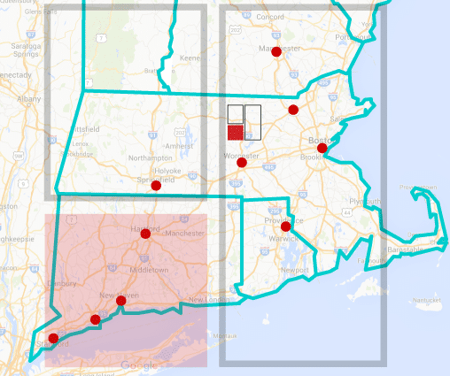
Geography affects freight costs, transit times, and responsiveness - especially for time-sensitive promotional work.
For brands with East Coast distribution or retail customers, Northeast and Mid-Atlantic contract packagers reduce freight costs and transit times compared to Midwest or West Coast partners. The reverse applies for West Coast brands.
Some brands intentionally diversify geographically - using regional partners near key distribution points to reduce overall logistics costs and provide backup capacity.
For promotional displays and seasonal programs with tight retailer windows, proximity to your distribution centers or retail customers can be the difference between hitting or missing a launch date.
Frequently Asked Questions
What certifications do contract packagers need for food products?
Most food brands require SQF (Level 2 or 3), FDA registration, and AIB certification at minimum. Additional requirements depend on your products and retail customers - Kosher certification, allergen controls, and SEDEX for ethical sourcing are common. Verify your retail customers' specific requirements before evaluating partners.
How long does it take to onboard a new contract packaging partner?
Initial setup typically takes 2-4 weeks to reach full production, depending on complexity. This includes materials procurement, quality system alignment, and production trials. Rush onboarding is possible but may carry premium costs.
What's a typical minimum order quantity for contract packaging?
MOQs vary significantly by service type and partner. Display builds may start at 100-500 units. Multipacks and kitting often require 10,000-50,000 units minimum. High-volume partners may require 100,000+ units. Ask specifically for your format.
How do I know if a contract packager can handle seasonal demand surges?
Ask about current capacity utilization, shift flexibility, and how they've managed peak periods for similar clients. A partner running near capacity may struggle during your Q4 surge. Look for partners with room to scale - flexible labor models and available capacity matter more than facility size.
How do contract packagers typically price their services?
Most quote per-unit pricing based on complexity, volume, and materials. Pricing factors include labor intensity, equipment requirements, quality specifications, and turnaround time. Request fully-loaded quotes that include all handling, storage, and coordination costs. For specific price ranges by service type, see what contract packaging actually costs.
What should I look for during a facility tour?
Observe organization, cleanliness, and how staff interact. Check for visible quality systems, proper material handling, and appropriate certifications displayed. Ask to see production similar to your requirements. Notice communication - does leadership know what's happening on the floor?
Ready to Evaluate Your Options?
Choosing the right contract packaging partner depends on your specific needs - what you're packaging, where you need it done, and how you want to work together.
If you're evaluating secondary packaging partners for multipacks, displays, club packs, or kitting in the Northeast or Mid-Atlantic region, start a conversation with Industrial Packaging. If you need help estimating project costs, our contract packaging cost calculator can help you plan.